
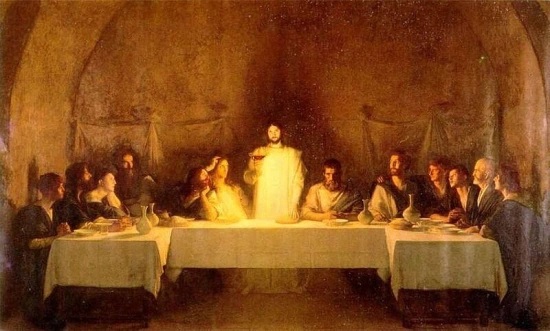
The Passover Plot
1. And the festival of unleavened bread was near, which is called the Passover.
2. And the chief priests and scribes sought how they might slay Him, for they feared the people.
3. And Satan entered into Judas, called Iscariot, being of the number of the twelve.
4. And he went away, and spoke with the chief priests and captains how he might betray Him to them.
5. And they rejoiced, and put together [an agreement] to give him silver.
6. And he promised, and sought an opportunity to betray Him to them in the absence of the crowd.
Historical significance of the Passover
As the divine narrative continues, the Passover is drawing near (Luke 22:1). This religious celebration has long been regarded as one of the holiest times in the Jewish calendar. Also known as “the Feast of Unleavened Bread,” it commemorates and celebrates the release of the children of Israel from Egyptian captivity. With this in mind, we need to pause here to consider the historical significance of the Passover.
After being in bondage for four hundred years, the children of Israel cried out to Jehovah, and Jehovah heard their pleas. Again and again, Jehovah spoke through Moses, saying to the king of Egypt, “Let My people go so that they might serve Me” (Exodus 5:1; 7:16; 8:1; 8:20; 9:1; 10:3). In an effort to get the king of Egypt to release the people from slavery, plague after plague was visited upon Egypt. But the king would not let the children of Israel go. Finally, the severest plague of all was about to come upon Egypt, the death of all the first-born in the land.
On the last night of their captivity, the children of Israel were told to take a lamb without blemish, slaughter it, and put the lamb’s blood on the doorways to their homes. On that night, they were to stay indoors and eat the roasted flesh of the lamb along with bitter herbs and unleavened bread. Meanwhile, the final plague would pass through the land killing all the first-born in every home — except those homes that were protected by “the blood of the lamb.” As it is written, “And when I see the blood, I will pass over you; and the plague will not be on you when I strike the land of Egypt” (Exodus 12:13).
This miraculous occurrence became known as the “Passover” — an event that Jehovah wanted them to always remember. As it is written, “So this day shall be to you a memorial; and you shall keep it as a feast to the Lord throughout your generations … as an everlasting ordinance” (Exodus 12:14). The Passover feast would not only memorialize the night that the plague passed over their homes, but it would also celebrate their liberation from bondage. As it is written, “You shall eat unleavened bread, remembering that on this day I brought your people out of the land of Egypt” (Exodus 12:17). “I brought you up out of Egypt,” says the Lord. “I have redeemed you from the house of bondage” (Micah 6:4). The Passover, then, was an annual celebration of their redemption.
Jesus is betrayed
With this historical background in mind, we can return to the divine narrative. It is twelve centuries later, and the Passover is still being celebrated. The children of Israel are still remembering their redemption from Egyptian captivity. At the same time, they now believe that they are under another kind of bondage — the oppression of the Roman government. Jesus has assured them, however, that “redemption is drawing near” (Luke 21:28). And yet, even while Jesus is proclaiming this message of liberation, the religious leaders are conspiring to kill Him. In their eyes, Jesus is a serious threat; His teachings are exposing their hypocrisy and challenging their authority. At the same time, Jesus’ popularity with the people is continuing to grow.
Therefore, the religious leaders want to get rid of Jesus, but in a way that will make it look like they have nothing to do with Jesus’ death. As it written, “the chief priests and scribes sought how they might slay Him, for they feared the people” (Luke 22:2).
The religious leaders do not have to wait very long for an opportunity to murder Jesus. Evil influences are always present, ready to invade human minds with malevolent thoughts, especially when people are disposed to receive them. Judas, who represents this tendency in ourselves, is the first of the disciples to succumb. And so, it is written, “Satan entered Judas” (Luke 22:3). As soon as this happens, Judas consults with the religious leaders, “seeking to betray Jesus to them” (Luke 22:4). This is a picture of “Judas in us.” It is the part of the human mind that is willing to betray our highest principles in exchange for the satisfaction of some lower desire. Moreover, the religious leaders are delighted by Judas’ offer. As it is written, “they rejoiced and made an agreement to give him silver” (Luke 22:5). 1
The agreement between Judas and the religious leaders has become known as “The Passover Plot.” At this point in the narrative, the plot is firmly in place. Judas will secretly hand Jesus over to the chief priests at a time when the multitude are not around. In the spiritual sense, this represents those times when our understanding (Judas) allows itself to be corrupted by the ruthless demands of our self-serving ambitions (chief priests). Of course, this must be done in secret because there are other parts of us, represented by the “multitude,” that would object.
In this episode, the multitude within us represents the multitude of noble thoughts and benevolent affections that are present with us. This is our higher nature, the part of us that delights in truth, desires to do good, and, for that reason, gladly follows Jesus. But when we are not in touch with this inner multitude, our understanding forms a secret agreement with the desires of our lower nature. In the language of sacred scripture, this is what is contained in the words, “Judas sought to betray Him in the absence of the multitude” (Luke 22:6). 2
A practical application
It is significant that Judas sought to betray Jesus in the absence of the multitude. Depending on the context, the scriptural terms “crowd” and “multitude” can signify either a multitude of negative thoughts and feelings or a multitude of positive ones. In the context of this episode, the multitude who want to hear Jesus represents our higher nature. This is the part of us that is eager to hear the Word of the Lord and do what it teaches. Sometimes this is referred to as our conscience. In the absence of conscience, our understanding can be easily influenced by our lower nature. In this regard, notice those times when you are tempted to succumb to lower desires. Like Judas who made his deal with the religious leaders in secret — when the multitude was not around — notice how this might apply to your life. Are there times when your conscience seems to be absent — times when false thoughts arising from lower desires are tempting you?
Celebrating a New Passover
7. And the day of unleavened bread came, in which the Passover must be slaughtered.
8. And He sent Peter and John, saying, Go prepare for us the Passover, that we may eat.
9. And they said to Him, Where willest Thou that we prepare?
10. And He said to them, Behold, as you come into the city, a man shall meet you carrying a pitcher of water; follow him into the house where he goes in.
11. And you shall say to the householder of the house, The Teacher says to thee, Where is the inn, where I may eat the Passover with My disciples?
12. And he will show you a large upper room furnished; there prepare.
13. And going, they found as He had told them; and they prepared the Passover.
14. And when the hour had come, He reclined, and the twelve apostles with Him.
15. And He said to them, With longing I have longed to eat this Passover with you before I suffer.
16. For I say to you that I will not eat of it anymore, until it be fulfilled in the kingdom of God.
17. And receiving the cup, He gave thanks [and] said, Take this, and divide [it] among yourselves.
18. For I say to you that I will not drink of the produce of the vine, until the kingdom of God shall come.
19. And taking bread, He gave thanks and broke [it], and gave to them, saying, This is My body, which is given for you; this do in remembrance of Me.
20. And likewise the cup after supper, saying, This cup [is] the New Covenant in My blood, which is poured out for you.
The next episode begins during the time of the Passover celebration. As it is written, “Then came the Day of Unleavened Bread, when the Passover must be killed” (Luke 22:7). The statement, “the Passover must be killed” refers to “the lamb without blemish” that would be killed at the time of the Passover (Exodus 12:5). The slaughter of a lamb at Passover was a time-honored tradition. But this time, the lamb without blemish — the innocent lamb who is about to be killed — is Jesus.
The new covenant
Even though Jesus has already predicted His imminent death, the disciples are unaware that this is about to happen. Nor are they aware that this celebration of the Passover would be their last supper with Jesus. When Jesus tells Peter and John to “go and prepare the Passover for us,” they simply ask, “Where do you want us to prepare?” (Luke 22:8-9). Jesus tells them that when they go into the city, they will meet a man who is carrying a pitcher of water. “When he meets you,” says Jesus, “Follow him into the house that he enters” (Luke 22:10). More deeply, a man carrying a pitcher of water represents the understanding of truth. Just as a pitcher is a recipient of water, the mind is a recipient of truth. If we are willing to follow the truth, wherever it may lead, we will be directed to a place of higher understanding. 3
As Jesus continues to instruct His disciples, He tells them that the man with the pitcher of water will lead them to “a large, furnished, upper room” (Luke 22:12). This “upper room” is a place within us where we can receive and understand higher truth. This is a picture of our higher mind, well-furnished with truth from God’s Word and prepared to receive instruction. Therefore, it is written that the disciples “went and found [that upper room], just as Jesus had told them, and they prepared the Passover” (Luke 22:13).
As the disciples are preparing the Passover meal in the upper room, Jesus sits down with them and says, “I have longed to eat this Passover with you before I suffer; for I say to you, I will no longer eat of it until it is fulfilled in the kingdom of God” (Luke 22:16). As He begins the ceremony, Jesus reminds them once again that His crucifixion is at hand and that this will be the last supper He will have with them. Before they have a chance to respond, Jesus tells them to take the cup of wine and divide it among themselves. Then, for a third time, Jesus reminds them that this will be the last time He will drink with them “until the kingdom of God comes” (Luke 22:18).
On one level it might seem that Jesus is merely being an observant religious person, carefully practicing the prescribed rituals of His faith. But the deeper truth is that this was no ordinary Passover. Jesus was introducing His disciples to a new kind of communion in which He would teach the spiritual significance of the Passover. Ordinarily, the Passover meal would begin with a blessing on the bread and wine. As they broke the bread and drank the wine of the Passover meal, they were to recite the same scripture that had been given to their ancestors. They were to say, “I do this because of what the Lord did for me when He brought me out of Egypt” (Exodus 13:8).
Jesus, however, does not recite those words of remembrance. Instead, after giving thanks for the bread, Jesus breaks it and gives it to His disciples, saying: “This is My body which is given for you. Do this in remembrance of Me” (Luke 22:19). At a literal level, Jesus is talking about His death on the cross — the sacrifice of His body. Then, as Jesus lifts the cup of wine, He says, “This cup is the new covenant in My blood, which is shed for you.” On one level, Jesus is referring to the blood which He will shed for all people when He dies on the cross. At a deeper level, however, Jesus is referring to the truth He has come to give to all people — the spiritual truth that will set people free from false beliefs and evil desires. This is the new covenant between God and His people.
The old covenant had to do with a literal understanding of the scriptures. But the new covenant that Jesus is offering has to do with the spiritual message contained within those laws and a new affection for keeping them. No longer would a relationship with God be based upon a rigid adherence to the letter of the law. Rather, a relationship with God would be found in understanding the spirit of the law and living according to it. As it is written in the Hebrew scriptures, “The days are coming when I will make a new covenant with the house of Israel,’ says the Lord. “I will put my law in their minds and inscribe it on their hearts. And I will be their God, and they shall be My people” (Jeremiah 31:31-33). 4
On the last night before their liberation from Egyptian captivity, the Israelites were commanded to place the blood of the lamb on the doorways to their homes. Then they were told to stay inside for the entire night. As it is written, “And none of you shall go out of the door of the house until morning” (Exodus 12:22). Throughout the night, the blood of the lamb that was on the doorway of their homes protected them from harm. That was the letter of the law; it was the old covenant. But Jesus brings a new understanding of the law, and with that new understanding inaugurates a new covenant between God and His people. From this point onwards, the celebration of Passover would not be about the plague that passed over people’s homes during the time of their captivity in Egypt. Rather, it would be about the divine truth that sets people free from spiritual bondage.
In the old covenant, the blood of the lamb placed over the doorways protected people from physical destruction. In the new covenant, we are not only protected from spiritual destruction but also given spiritual life through the truth that Jesus teaches.
A practical application
In sacred scripture, a “house” represents the human mind, and the “doorway” to a house represents the place where thoughts enter. Therefore, keeping truth at the forefront of our minds offers protection from spiritual danger. For example, Jesus’ teachings about humility and faith can prevent pride and despair from entering our mind. Similarly, Jesus’ teachings about forgiveness and love can prevent resentment and hatred from entering our mind. This is what it means to be saved by the blood of the lamb. It is salvation from sin through living according to the truth that Jesus teaches. As a practical application, select some truth from the Lord’s Word and visualize it as a protection. Keep it at the forefront of your mind, living according to it, and notice how it wards off false ideas and negative feelings. Meanwhile, stay “inside,” protected by truth, throughout the night — that is, until those destructive thoughts and negative feelings “pass over.” 5
Arguing About Greatness
21. Nevertheless, behold, the hand of him who [is] with Me on the table.
22. And indeed the Son of Man goes, according to what was determined; but woe to that man by whom He is betrayed!
23. And they began to dispute among themselves, who then of them it was that was about to commit this.
24. And there was also a strife among them, which of them should be thought greatest.
25. And He said to them, The kings of the nations have lordship over them, and they that have authority over them are called benefactors.
26. But you [shall] not [be] so; but he that is greater among you, let him become as the younger, and he that governs as he that ministers.
27. For which [is] greater, he that sits, or he that ministers? [Is] not he that sits? But I am in the midst of you as He that ministers.
28. But you are they who have remained with Me in My temptations.
29. And I set up for you a kingdom, as My Father has set up for Me,
30. That you may eat and drink at My table in My kingdom, and sit on thrones, judging the twelve tribes of Israel.
While He was in the upper room with His disciples, Jesus provided the foundation for what would become the new covenant. It would be a new way of connecting with God, not through fear and obedience, but rather through understanding and love. Much of what He said, however, was clothed in symbolic language, especially His references to His body and His blood. In everything that He said, Jesus was teaching them the deeper meaning of what it takes to be delivered from bondage — not just physical bondage, but, more deeply, to be delivered from spiritual bondage.
The disciples are not yet prepared to understand these deeper levels, but they can understand what it means to betray their leader. Therefore, without further explanation, Jesus says, “See, the hand of him who is betraying Me is at this table with me” (Luke 22:21). Jesus knows that He is about to undergo intense suffering and crucifixion. Nevertheless, He predicts that the torment of the person who betrays Him will be much greater. As Jesus puts it, “Truly, the Son of Man goes as it has been determined, but woe to that man who has betrayed Him” (Luke 22:22).
At this point in the divine narrative, Jesus has consistently spoken of Himself as the Son of Man. Therefore, when Jesus now speaks about the Son of Man being betrayed by someone sitting at the table with Him, the disciples know that Jesus is saying that one of them has betrayed Him. Immediately the disciples begin to question each other, looking for the guilty party, and wondering who would commit such a deceitful act (Luke 22:23).
In a deeper sense, to “betray the Son of Man,” is to learn the truth but not to live according to it. For example, Jesus has frequently taught His disciples about the importance of humility. He has told them that when they are invited to a wedding feast, they should not try to exalt themselves by sitting at one of the high places. Rather, they should take a lower place. As Jesus has said, “Whoever exalts himself will be abased, and whoever humbles himself will be exalted” (Luke 14:11). Jesus has also spoken about a humble beggar named Lazarus who went to heaven, a humble widow whose meager offering was worth more than all the contributions of the wealthy, and little children who easily receive the kingdom of God. These are among the many lessons that the Son of Man has taught them.
It is remarkable, then, that despite these many lessons, this often-repeated message about humility has not taken root. For example, in the very next verse the disciples are disputing about who is the betrayer and arguing about which of them would be regarded as the greatest (Luke 22:23-24).
As we shall soon see, Judas’ betrayal was great, but the betrayal of all the disciples is no less significant. This is because every disciple represents not only a heavenly principle but also a particular way in which each of us betrays the Son of Man. This betrayal happens every time we resolve to live according to the highest principles that we know and then find ourselves failing to live according to those principles. In our highest states of mind, we have the resolution of angels; in our lowest states of mind, we seem to have lost our will. These lofty ambitions which were made in our highest states seem to be forgotten, buried under rationalizations, justifications, and selfish desires.
Sitting on thrones
Ever the patient teacher, Jesus continues to instruct His disciples. Once again, Jesus delivers a lesson about humility. This time it is in the context of leadership. He begins by reminding them that self-serving rulers enjoy telling people what to do, controlling them, and lording it over them. As Jesus puts it, “The kings of the Gentiles exercise lordship over them” (Luke 22:25). Knowing that He will soon be leaving their presence, Jesus gives them instructions about becoming servant-leaders. Unlike those who govern because they love power and pre-eminence, the disciples should see themselves as humble servants. As Jesus says, “It shall not be that way among you. Instead, the greatest among you should be like the youngest, and he who governs should be as one who serves” (Luke 22:26-27).
Through this teaching, Jesus is bringing them back to one of His most important principles, and one of the last things He will teach them before His crucifixion. It’s another lesson in humility. True leaders do not see themselves as “greatest.” Instead, they understand that it is greater to serve than to be served. 6
It is reassuring to know that Jesus does not sharply rebuke the disciples. He understands that they — like us — are still learning. They have been following Him closely for three years and have remained by His side, even during times of conflict. Therefore, Jesus offers these words of comfort: “But you are those who have continued with Me in My trials. And I bestow upon you a kingdom, just as My Father bestowed one on Me” (Luke 22:28-29).
While Jesus is thinking and speaking spiritually, the disciples are, once again, thinking materially. They do not realize that when Jesus speaks of a “kingdom,” He is referring to the only power which rules and governs in the spiritual world — the power of divine truth when filled with God’s love. In other words, Jesus is promising His disciples that in the coming kingdom, they will have the power to rule over the demands of their lower nature. When Jesus says that they will indeed “eat and drink at His table in His kingdom,” He is saying that they will receive divine love to feed their spiritual hunger, and divine truth to quench their spiritual thirst.
To the extent that the disciples are willing to receive the spiritual nourishment that Jesus provides, they will be able to govern their spiritual lives and have the power to subdue selfish inclinations. While this is indeed Jesus’ deeper message, He expresses it in a way that is accommodated to the worldly ambitions of His disciples. Jesus knows that at this time in their spiritual development, the disciples need this kind of incentive. Therefore, using the language of sacred scripture, Jesus tells them that they will “eat and drink at my table in My kingdom, sitting on thrones judging the twelve tribes of Israel” (Luke 22:30). 7
Jesus is not making a false promise. While the disciples will never sit on physical thrones, Jesus knows that they will eventually have the wisdom that will enable them to judge the “twelve tribes of Israel within themselves” — their whole world of thought and feeling. From that higher perspective, they would be able to differentiate between self-serving ambitions and nobler aspirations, using the Lord’s truth to do so. In the language of sacred scripture, they would indeed be “sitting on thrones” governing their inner world. 8
A practical application
Like the disciples, we are often motivated by lesser goals, especially as we begin our spiritual journey. Gradually, we come to see that it is more important to govern our inner world than to rule over many kingdoms. In place of our desire to control people and judge their motives, we can study the Word, look within, and pray for the power to subordinate selfish ambitions and banish every evil inclination from our inner kingdom. With this in mind, ask yourself this question: “Are there any thoughts and feelings that I need to subordinate or even banish from my inner kingdom so that I might live according to my highest aspirations?” Practice using the Lord’s truth to govern your inner world.
Preparing for the Hour of Trial
31. And the Lord said, Simon, Simon, behold, Satan has asked for you, to sift [you] as wheat.
32. But I have entreated concerning thee, that thy faith fail not; and when thou art converted, strengthen thy brothers.
33. And he said to Him, Lord, I am prepared to go with Thee both into prison and to death.
34. And He told [him], I say to thee, Peter, the cock shall not crow today before thou hast three times denied that thou knowest Me.
35. And He said to them, When I sent you out without purse, and pack, and shoes, lacked you anything? And they said, Nothing.
36. Then said He to them, But now, he that has a purse, let him take [it], and likewise the pack, and he that has not a sword, let him sell his garment and buy one.
37. For I say to you that this that is written must yet come to an end in Me: And He was reckoned with the transgressors. For the things concerning Me have an end.
38. And they said, Lord, behold, here [are] two swords. And He said to them, It is enough.
During the Passover supper with His disciples, Jesus predicted that one of them would betray Him. In this next episode, it becomes apparent that Judas is not the only betrayer. Although Judas is the first to betray Jesus, Simon Peter will be next. As Jesus forewarns him, “Simon, Simon! Indeed, Satan has asked for you, that he may sift you as wheat. But I have prayed for you that your faith should not fail” (Luke 22:32). In response, Peter displays a show of self-confidence. He cannot believe that his faith will fail. Nor can he believe that he would ever forsake Jesus. On the contrary, he makes this solemn declaration: “Lord, I am ready to go with You, even to prison and to death” (Luke 22:33).
Jesus, however, knows that Peter’s faith will be tempted. Therefore, He says to Peter, “Before the rooster crows today, you will deny three times that you know Me” (Luke 22:34). Every gospel mentions that Peter will deny the Lord three times before the rooster crows. But only in Luke do we read the additional phrase that Peter will deny that He knows Jesus. The reference to “knowing” reminds us that the Gospel According to Luke is about the development of the understanding. It’s about understanding the divine truth so deeply and with such heartfelt conviction, that in the hour of temptation, one’s “faith will not fail.”
For Jesus and His disciples, the hour of temptation is rapidly approaching. It will be a time for the disciples to summon up all the truth that Jesus has taught them. Prior to this time, they needed merely to trust in Jesus’ loving presence. This is similar to the way children trust in the protection of their parents, especially in their early stages of development. It is the same for each of us as we begin our spiritual journeys. Earlier in this gospel, when Jesus sent His disciples out to spread the good news, He said to them, “Take nothing for your journey, neither staff, nor bag, nor bread, nor money” (Luke 9:3). All they had to do was trust in Jesus.
Now, however, it is different. Innocent trust is important, but it will not be enough. In this regard, Jesus says to His disciples: “When I sent you without money bag, sack, and sandals, did you lack anything?” (Luke 22:25). Their reply is that they lacked “nothing” (Luke 22:35). Jesus has been patiently instructing them all along the way, giving them only as much truth as they could use. But now, as they are about to enter into deeper trials, Jesus says that things are going to be different. As Jesus puts it, “But now, if you have a money bag, take it, and likewise a sack; and if you do not have a sword, sell your coat and buy one” (Luke 22:36).
Using the language of sacred scripture, Jesus is exhorting His disciples to arm themselves with money bags, sacks, and swords. In telling them to arm themselves with “money bags,’ Jesus means that they will need to use their understanding of spiritual truth to deal with the coming trials. In the Word, “money bags” and “sacks” are both receptacles — especially receptacles of truth. Similarly, they will need spiritual “swords” for protection. In the language of sacred scripture, “swords,” represent the ability to make sharp, keen, intelligent decisions based on a well-developed understanding. In biblical symbolism, a drawn sword represents the invincible power of divine truth at war against falsities and evils. 9
In brief, Jesus is telling His disciples to prepare for what has already been prophesied in scripture. Jesus knows that all the prophecies about Him — including His crucifixion and death — are about to be accomplished. As He puts it, “What is written about Me is reaching its fulfillment” (Luke 22:37). The disciples will need to be especially prepared for this time of trial. Their minds should be armed with the powerful truths that Jesus has taught them.
This conversation between Jesus and His disciples, in which He tells them to bring money bags, sacks, and swords, takes place only in Luke — the gospel that relates to the development of the understanding of truth. In their upcoming trials, the disciples will need to have at their disposal as much truth as possible. There will be a war going on within them as they go through their times of spiritual trial. During these times of spiritual combat, when fears and doubts arise in their minds, the disciples will need to remember and rely on the truth that Jesus has given them. 10
The disciples, however, are not yet ready to understand Jesus’ deeply symbolic language. He is telling them to arm themselves with spiritual truth; but they think He is talking about literal swords. Therefore, they say, “Lord, look, here are two swords” (Luke 22:38).
In response, Jesus says, “It is enough” (Luke 22:38). The disciples are thinking that two swords will be enough to fight off enemies. In spiritually reality, however, no physical weapon could defend them against the spiritual struggles they were about to undergo. But there are two swords that would defend, support, and sustain them through the coming trials. First, and foremost, would be the sword of their faith in Jesus. And their second “sword” would be a life according to the commandments of the decalogue. In essence, this is what it means to love the Lord with all one’s heart and to love the neighbor as oneself. These “two swords,” says Jesus, are “enough.” 11 Prayer on the Mount of Olives
39. And going out, He went according to [His] custom to the Mount of Olives, and His disciples also followed Him.
40. And when He was at the place, He said to them, Pray that you enter not into temptation.
41. And He pulled back from them about a stone's cast, and kneeling down He prayed,
42. Saying, Father, if Thou intend that this cup should pass from Me — nevertheless not My will, but Thine, be done.
43. And there was seen by Him an angel from heaven strengthening Him.
44. And being in agony, He prayed more intently; and His sweat was as drops of blood descending to the earth.
45. And standing up from prayer, coming to His disciples He found them slumbering from sorrow,
46. And said to them, Why do you sleep? Stand up and pray that you enter not into temptation.
The power of prayer
Jesus has frequently reminded His disciples that He must go to Jerusalem, suffer many things, be confronted by the chief priests, condemned, scourged, and crucified (Luke 9:22; 9:31; 9:44). Even as He entered Jerusalem as the promised Messiah, Jesus again spoke to His disciples about His death and crucifixion (Luke 18:31-33). As Jesus celebrated the Passover with His disciples, He told them three times that this would be the last meal He would have with them and that all things written by the prophets concerning Him would soon be accomplished (Luke 22:18). And even when Jesus told them that He would be “numbered with the transgressors,” echoing Isaiah’s prophecy that the Messiah would “pour out His soul unto death” (Isaiah 53:12), the disciples did not understand what was about to happen.
Nevertheless, Jesus does not give up on His disciples. Instead, He continues to do everything possible to lead them to the highest places of love and understanding. This is represented in the next verse which begins with a picture of the disciples following Jesus upwards to the Mount of Olives. It is there, from that higher vantage point, that Jesus says to His disciples, “Pray, that you might not enter into temptation” (Luke 22:40).
In both Matthew and Mark, it is written that Jesus led His disciples to the place called “Gethsemane” (Matthew 26:36; Mark 14:32). In Luke, however, “Gethsemane” is not mentioned. Instead, this place is referred to as the “Mount of Olives.” While these locations are technically identical, the difference in terminology is significant. In sacred scripture, “olives,” because of their many uses and golden color, are often associated with “love.” And mountains, because of their height, are often associated with an elevated understanding and with prayer. As it is written in the Hebrew scriptures, “To all who keep my covenant, I will bring them to my holy mountain and make them joyful in my house of prayer” (Isaiah 56:7).
This focus on prayer runs throughout the Gospel of Luke like a steady stream. To cite only a few examples, at His baptism, while Jesus prayed, heaven was opened (Luke 3:21). At His transfiguration, Jesus went up into a mountain to pray. And there, on that mountaintop, while Jesus prayed, His face was transformed, and His robe became as white as lightning (Luke 9:29-30). While these episodes are also recorded in Matthew and Mark, the additional detail about Jesus praying at these times is mentioned only in Luke. To take another example, both Matthew and Mark describe Jesus going up into a mountain to pray (Matthew 14:23; Mark 6:46). But when Luke records the same incident, he adds the detail that Jesus continued all night in prayer (Luke 6:12). Only in Luke do we find the words, “Lord, teach us to pray” (Luke 11:1). Only in Luke do we hear the prayers of the Pharisee and the tax collector (Luke 18:9-14). This is why in Luke, with its focus on the development of a higher understanding and on prayer, this higher place is not called “Gethsemane,” but rather the “Mount of Olives.”
Therefore, when Jesus tells His disciples to “Pray that you may not enter into temptation” (Luke 22:40), He is repeating something that He has told them often and modeled for them frequently. This reminder is especially important at this point in the divine narrative. Knowing that the faith of His disciples is about to be severely tested, especially as He goes through crucifixion and death, Jesus wants His disciples to be well armed for their coming temptations. He knows that prayer will open the way for the Lord to bring truth to their remembrance. And these truths will become their weapons of defense. They will be the swords and shields necessary for inner combat.
The severity of spiritual combat
The struggles that Jesus is undergoing, not only on the Mount of Olives, but also throughout His life, have been continual, progressive, and increasingly severe. We first learned about them when the devil tempted Jesus in the wilderness. At that time, Jesus overcame every temptation through the power of divine truth. As a result, “the devil departed from Him for a time” (Luke 4:13). 12
But it was just “for a time,” meaning that the battle wasn’t over. The devils of hell would return, again and again to torment Jesus, not only through the religious leaders, but now through deeper and more subtle attacks, leading Him into despair about the outcome of His mission. 13
This becomes evident as Jesus removes Himself “about a stone’s throw” from the disciples and kneels down to pray. He knows that He is about to undergo severe temptations, represented by the “cup” of suffering. Therefore, He begins His prayer with the despairing words, “Father, if it is your will, remove this cup from Me.” He then adds, “Nevertheless, not My will, but Yours be done.” (Luke 22:42).” 14
As we have already seen, prayer has the power to open heaven. This is what happens now as Jesus kneels in prayer. As it is written, while Jesus prayed, “an angel appeared to Him from heaven, strengthening Him” (Luke 22:43).
Like Jesus, each of us is spiritually strengthened whenever an angel calls to our remembrance divine truth from the Lord’s Word. This truth becomes the sword we use to fight against the evils and falsities that strive to fill us with fear and doubt. Such combat can be a mighty struggle. At such times our prayers must be earnest and fervent. As it is written, “Being in agony, Jesus prayed more earnestly. And His sweat was like drops of blood falling to the earth” (Luke 22:44). 15
This imagery is a powerful reminder that spiritual combat can be severe. It can be an agonizing struggle. No matter how strong the desire to give in might be, we must pray that we not succumb. That’s why Jesus continues the inner combat, praying earnestly and fervently, with sweat pouring down like drops of blood. The more furiously the hells assaulted Him, the more fervently He prayed.
In the depth of His prayer, Jesus realizes that the salvation of the human race hangs in the balance and that the only way to deal with the coming crucifixion is to go through it. He also knows that He must face His coming trial with courage and conviction. Knowing that His human side cannot prevail over hell, He places His trust in God, knowing that the battle is the Lord’s, and that God’s will must be done. Strengthened by this thought, Jesus “rises up” from prayer and goes to His disciples (Luke 22:45). 16
The disciples, who have been with Jesus during this time, are dealing with their own sorrow. As a result, they have fallen asleep. Jesus has recently told them that some of them are going to betray Him, that they should focus on service rather than greatness, and that they should arm themselves with swords for the coming trials. Jesus has also told them to pray so that they do not enter into temptation. For the disciples who have been hoping to sit on thrones, this is not good news. Understandably then, when Jesus rises up from prayer, He finds His disciples “asleep, worn out by their sorrow” (Luke 22:45). Jesus once again reminds them to pray. “Why do you sleep?” He says to them. “Rise and pray, lest you enter into temptation.” (Luke 22:46).
Healing a Soldier’s Ear
47. But while He yet spoke, behold, a crowd; and he that was called Judas, one of the twelve, came before them, and drew near to Jesus to kiss Him.
48. But Jesus says to him, Judas, betrayest thou the Son of Man with a kiss?
49. And they who were around Him, seeing what would be, said to Him, Lord, shall we smite with the sword?
50. And one of them smote the servant of the chief priest, and took off his right ear.
51. But Jesus answering said, Allow ye [it], even to this; and touching his ear, He healed him.
52. And Jesus said to the chief priests, and captains of the temple, and the elders who had come against Him, Have you come out as against a robber, with swords and wooden [rods]?
53. When I was daily with you in the temple, you stretched out no hands against Me; but this is your hour, and the authority of darkness.
While Jesus is still speaking with His disciples, encouraging them to “rise and pray,” a multitude arrives. They are led by Judas and are intending to arrest Jesus. When Judas sees Jesus, he offers Jesus the traditional greeting of a kiss. Well aware of Judas’ intention, Jesus says to him, “Judas, are you betraying the Son of Man with a kiss?” (Luke 22:48). As soon as the other disciples realize what is happening, they rush to Jesus’ defense, saying, “Lord, shall we strike with a sword?” (Luke 22:49). And then, even before Jesus has a chance to respond, they do just that. As it is written, “And one of them struck the servant of the high priest and cut off his right ear” (Luke 22:50).
Jesus tells His disciples it is unnecessary to use their swords to defend Him. “Permit even this,” says Jesus (Luke 22:51). And then Jesus performs another miracle: He reaches up, touches the ear of the chief priest’s servant, and heals him (Luke 22:51). It should especially be noted that this miracle, which corresponds to the way in which God restores our ability to hear spiritual truth and understand His Word, takes place only in Luke — the gospel that focuses primarily on our understanding. Throughout His ministry, Jesus has been encouraging people to hear and understand truth. As He said earlier in this gospel, “He who has ears to hear, let him hear,” (Luke 8:8; 14:35) and “Let these words sink down into your ears” (Luke 9:44). 17
After healing the servant’s ear, Jesus turns to the religious leaders who have come with the soldiers and says to them, “Have you come out as against a robber, with swords and clubs?” (Luke 22:52). He then adds, “When I was with you daily in the temple, you did not try to seize Me” (Luke 22:53).
On one level, they did not seize Jesus in the temple because they were afraid of what the people might say and do. But on a deeper level, their coming in the darkness, like a thief, pictures how our deepest temptations come at our darkest hours. These are the times when the truth becomes twisted and perverted by our fears and doubts. These fears and these doubts are represented by the chief priests and elders, to whom Jesus says, “This is your hour, and the power of darkness” (Luke 22:53).
Peter’s Denial
54. And taking Him, they led [Him away], and led Him into the house of the chief priest; and Peter followed afar off.
55. And when they had lit a fire in the midst of the courtyard, and had sat down together, Peter sat in the midst of them.
56. But a certain maid, seeing him as he sat by the light, and gazing at him, said, This [man] was also with Him.
57. And he denied Him, saying, Woman, I know Him not.
58. And after a very little [while] another, seeing him, declared, Thou art also of them; but Peter said, Man, I am not.
59. And about one hour intervening, another strongly affirmed, saying, In truth this [man] also was with Him, for he also is a Galilean.
60. And Peter said, Man, I know not what thou sayest. And immediately, while he yet spoke, the cock crowed.
61. And the Lord, turning, looked at Peter. And Peter remembered the word of the Lord, when He had said to him, Before the cock crows, thou shalt deny Me three times.
62. And Peter went out and wept bitterly.
Whenever we are in times of “darkness,” our faith is on trial. In the next episode, this is pictured by Peter’s denial that he knows Jesus. As we begin this episode, it should be kept in mind that Peter, like all the disciples, represents an aspect of ourselves. Normally, Peter represents faith, especially the willingness to receive God’s teachings and live according to them. But sometimes Peter has an opposite representation. At those times he represents those moments when faith is weak. These are the times when we have the opportunity to take a strong stand for what we believe, but refuse to do so. In this episode, then, Peter will have the opportunity to either confess His faith or deny it. 18
The episode begins just after Jesus is arrested and brought into the house of the high priest (Luke 22:54). Peter follows, but “at a distance” so that He doesn’t appear to be associated with Jesus. It’s still the middle of the night, and events are shrouded in darkness. It’s cold, too. That’s why they kindle a fire and sit down in the middle of the courtyard. Meanwhile, Jesus is inside being questioned by the high priest and other religious leaders.
It’s important to note that Jesus is inside while Peter is outside in the courtyard. It is there, in the courtyard, while warming himself by the fire, that a servant girl looks at Peter and says, “This man was also with Him” (Luke 22:56). This is Peter’s first opportunity to declare that He is a proud follower of Jesus. Instead, when the servant girl identifies Him as one of the disciples, Peter says, “Woman, I do not know Him” (Luke 22:56). Moments later, when another person sees Peter and says, “You also are of them,” Peter quickly replies, “Man, I am not” (Luke 22:58). Then, an hour later, a third person approaches Peter, insisting that Peter is surely one of Jesus’ followers (Luke 22:59). This is Peter’s third opportunity to declare his faith. Instead, Peter is even more adamant, insisting that he has nothing to do with Jesus. As Peter says to the man, “I do not know what you are talking about” (Luke 22:60).
Just then, even as Peter is still speaking, “the rooster crows” (Luke 22:60).
The crowing of the rooster heralds the coming of dawn. It has been a long, cold night in the darkness. But the sun is beginning to rise and with it the first light of the morning. It is then that Peter looks inward, towards the inner chambers where Jesus is. At the same time, Jesus turns and looks at Peter (Luke 22:61). At that moment, Peter remembers what Jesus said: ‘Before the rooster crows, you will deny Me three times” (Luke 22:61). This realization is, of course, a deeply painful moment for Peter. As it is written, “Peter went out and wept bitterly” (Luke 22:62). And yet, this is also an important moment of recognition. It is the dawning of new light in Peter’s mind, represented by the crowing of the rooster at daybreak.
A practical application
Peter’s early morning awakening is a significant one. When he remembers his promise and Jesus’ words, he weeps bitterly. There are times when we, too, experience deep remorse, especially when we have not lived up to our highest principles. And yet, in spiritual reality, the recognition of some spiritual failure is a sign of progress. At least, we are awake. At least we have noticed. While remorse is important, it can also be an impetus to do better. Peter’s story can remind us that recognition of our weaknesses can be a good thing. It can be the dawn of a new day in our spiritual lives. So, be quick to recognize a spiritual failing. Apologize readily. And continue the journey, despite the inevitable setbacks. Resolve to do better. As Jesus says to His sleepy disciples, “Rise and pray.”
The Trial Begins
63. And the men that beset Jesus mocked Him, beating [Him].
64. And covering Him, they struck Him on the face, and asked Him, saying, Prophesy! Who is it that smote Thee?
65. And many other things, blaspheming, they said against Him.
66. And when day had come, the elders of the people and the chief priests and scribes gathered, and led Him up into their own council,
67. Saying, If Thou art the Christ, tell us. And He said to them, If I tell you, you will not believe.
68. And if I also ask [you], you will not answer Me, nor release [Me].
69. From henceforth shall the Son of Man sit on the right hand of the power of God.
70. And they all declared, Art Thou then the Son of God? And He said to them, you say that I am.
71. And they said, What further need have we of testimony? For we ourselves have heard from His mouth.
While Peter is outside, weeping over his betrayal, Jesus is inside, in the high priest’s home being cruelly tortured. As it is written, “Now the men who held Jesus mocked Him and beat Him. And having blindfolded Him, they struck Him on the face and asked Him, saying, ‘Prophesy! Who is it that struck You?’ And many other things they blasphemously spoke against Him” (Luke 22:63-65).
The irony of this scene is remarkable, especially when we consider that the one who can see most clearly is being blindfolded by those who cannot see. This detail, which involves the blindfolding of Jesus, appears only in Luke. It reminds us that one of the main themes in Luke is the opening of the understanding, the awakening from spiritual blindness, and the recovery of spiritual sight.
It is also noteworthy that the mockery and beating of Jesus takes place in the dark — another indication of the blindness of the men who mocked Jesus. But even more blind are the religious leaders who have seen and heard Jesus in the light of day and are still determined to kill Him. However, before they do so, they need a pretext. We read, therefore that “As soon as it was day, the elders of the people, both chief priests and scribes, came together and led Him into their council, saying, If You are the Christ, tell us’” (Luke 22:67).
Jesus knows that they are determined to convict Him. The time for dialogue or for reasoning with them is over. Their spiritual blindness will not allow them even to consider the possibility that He is the promised Messiah, the Christ. Therefore, Jesus says to them, “If I tell you, you will by no means believe Me” (Luke 22:67). And then He adds, “And if I also ask you, you will by no means answer Me or let Me go” (Luke 22:68).
As we have seen throughout this gospel, Jesus manages to turn every challenge into an opportunity to teach another powerful truth. It is no different this time. Jesus is surrounded by religious leaders who know the Hebrew scriptures well, especially the prophecies about the coming of the Messiah. One of the most familiar prophecies was given through the prophet Daniel when he saw “The Son of Man, coming with the clouds of heaven … whose kingdom will never be destroyed” (Daniel 7:13-14). Another familiar prophesy was given through David when he wrote that the Messiah would “sit at the right hand of God” making His enemies His “footstool” (Psalm 110:1). Bringing both of these well-known prophesies together into one statement, Jesus says to the religious leaders, “Hereafter, the Son of Man will sit on the right hand of the power of God” (Luke 22:69).
The religious leaders, of course, cannot fail to make the connection. Jesus is comparing Himself to the Son of Man who will rule with extraordinary power, sitting at the right hand of God. Jesus is letting them know, in the most powerful way possible, that the Son of Man will soon be ruling, and that His kingdom will never be destroyed. More deeply, Jesus is referring to the coming of spiritual truth through the literal teachings of the Word — the clouds of heaven. This truth would be so powerful that it would subjugate the hells (make them a “footstool”) thereby releasing humanity from spiritual bondage. This is what is meant, spiritually, by “the Son of Man coming in the clouds of heaven.” 19
This deeper meaning, of course, evades the understanding of the religious leaders. To them, it sounds like Jesus is falling into their trap and that He has now declared Himself to be the Christ. This leads them to their second, and to what they believe is an even more incriminating question, “Are you then the Son of God?” (Luke 22:70).
This is not a simple “yes” or “no” question. Throughout His time on earth, Jesus was in the process of uniting divine truth (the Son of Man) with divine goodness (the Son of God), but this process was gradual, and could only be accomplished through a lifetime of conquering in temptation. As He overcame in every temptation, Jesus was able to expel something from the merely human heredity He had inherited from Mary, and put on something of the Divinity that was within Him from eternity. But this process would not be entirely complete until His resurrection. That is why Jesus could truly say that “Hereafter the Son of Man will sit on the right hand of the power of God.” 20
Jesus’ mission was not yet complete. There was still more work to do, especially on the cross. That’s why He could only give a seemingly ambiguous, but very true response when they asked, “Are you then the Son of God?” His response was, quite simply, “You say that I am” (Luke 22:70). Taking this as a confession, the religious leaders are delighted. And so, as they finish their interrogation, they exclaim, “What further testimony do we need? For we have heard it ourselves from His own mouth” (Luke 22:71).
A practical application
In this chapter, Jesus has been going through severe trials. Remarkably, every trial serves to drive Him deeper into His divinity. Through every trial, Jesus not only subdues hell, but also manifests the divine love in human form. While none of us can do this at the level that Jesus did, it is instructive to learn from His example. To what extent do you refuse to succumb in times of trial? Do you use these times as opportunities to draw closer to God, relying on the truth He has given you? Or is there a point at which you finally give in, allowing the hells to have their way? Use these questions for self-examination as we continue to stay with Jesus during His time of temptation.
Poznámky pod čarou:
1. Apocalypse Explained 740:8: “Judas Iscariot represents those who are in falsities from evil.” See also Apocalypse Explained 740:17: “The term ‘the devil’ signifies the hell from which are evils, and ‘Satan’ signifies the hell from which are falsities.”
2. Arcana Coelestia 1941: “In the Word, the term ‘multitude’ signifies multiplication beyond measure … especially the multiplication of truth and good with a person.”
3. Arcana Coelestia 3083: “A ‘pitcher,’ which, being a vessel for the reception of water, is in the internal sense a recipient of the knowledges of truth, and also of truth itself, which is signified by ‘water.’”
4. Apocalypse Explained 701:20: “The covenant which the Lord will make is a spiritual covenant, or a covenant by means of spiritual truth, and not a covenant by means of natural truth [the letter of the Word]. The latter is the old covenant which was made with the sons of Israel, and the former is the new covenant.”
5. Arcana Coelestia 9410:6: “[In the Word it is said that] ‘They conquered by ‘the blood of the lamb’…. They who are in the external sense of the Word understand these words in a merely literal way. That is to say, they take ‘blood’ to mean [physical] blood, that is, the Lord’s passion [on the cross], when, in fact, this refers to divine truth emanating from the Lord. People are not saved by blood but by hearing God’s truth and by living according to it.” See also Arcana Coelestia 10152:2: “They who are in the externals of the church believe that the Lord redeemed the world, that is, the human race, by His own blood, by which they mean the passion of the cross. But they who are in the internals of the church know that no one is saved by the Lord’s blood, but by a life according to the precepts of faith and charity from the Lord’s Word. And they who are in the inmosts of the church understand that ‘the Lord’s blood’ signifies the divine truth proceeding from Him.”
6. Heaven and Hell 218: “Those who govern in the spiritual kingdom are pre-eminent in love and wisdom. Because of this, they desire the good of all, and from wisdom know how to provide for the realization of that good. Such governors do not domineer or dictate, but they minister and serve…. Nor do they make themselves greater than others, but less, for they put the good of society and of the neighbor in the first place, and put their own good last.”
7. Arcana Coelestia 3068: “That they do not eat and drink in the kingdom of the Lord, and that there is no table there, is plain to everyone; so that by ‘eating and drinking at the Lord's table in His kingdom,’ something else is signified, namely, enjoying the perception of good and truth.” See also Arcana Coelestia 6397: “We read in the Word that … the twelve apostles are to sit upon thrones and judge the twelve tribes of Israel. A person who does not know the internal sense of the Word may believe that this is the way it will be. But how this is to be understood may be seen from the internal sense when it is known what is signified by the ‘twelve apostles’ and by the ‘thrones,’ namely, that judgment is according to all truths in their complex. It is not that anyone can judge, but rather it is the Lord alone who judges, because all truth proceeds from Him.”
8. Arcana Coelestia 3417:3: “The Lord spoke in adaptation to the limited understanding of His disciples, so that they might be aroused and introduced to good, so as to learn it, to teach it, and to do it. At the same time, He teaches the [true] nature of greatness and pre-eminence in heaven. These and the like are the appearances of truth of a lower degree; for they do become relatively great, pre-eminent, powerful, and of authority, seeing that a single angel has greater power than myriads of infernal spirits. Angels do not have this power from themselves, but from the Lord. And they have it from the Lord in the proportion that they believe that they have no power from themselves, thus that they are the least. They believe this insofar as they are in humility and in the affection of being of service to others, that is, insofar as they are in the good of love to the Lord, and in charity toward the neighbor.”
9. Arcana Coelestia 8595:2: “By ‘a sword drawn in the hand’ is signified divine truth in its power, fighting against falsities and evils.”
10. Apocalypse Explained 840:6: “The Lord was about to suffer the passion of the cross. Because this must necessarily distract the minds of those who then lived, and also the minds of the disciples, and cause them to have doubts concerning Him and His kingdom, and so bring them into temptations; and since these can only be shaken off by means of truths, therefore the Lord says, ‘He that hath a purse and bag, let him take them,’ that is to say, they who possess truths from the Word in which it is foretold that Christ should suffer such things, let them take heed lest they not lose sight of those truths…. “Selling their garments” signifies rejecting everything of their own; “buying a sword” signifies getting truths with which to fight against falsities.” See also Apocalypse Revealed 52: “By ‘swords’ is signified truth fighting against untruths and destroying them . . . for by ‘wars’ in the Word spiritual wars are signified, and these are of what is true against what is untrue and of what is untrue against what is true, and therefore by ‘weapons of war’ such things are signified as are fought with in these wars.”
11. Arcana Coelestia 2799:4: “They said to Him, ‘Behold, Lord, here are two swords.’ And Jesus said, ‘It is enough.’ A ‘sword’ here is used to mean nothing else than the truth, from which and for which they were to engage in conflict.” See also Apocalypse Revealed 491 “These two, the acknowledgment of the Lord, and a life in accordance with the precepts of the decalogue, are the two essentials of the New Church.”
12. Arcana Coelestia 1812: “While He lived in the world the Lord was in continual combats of temptations, and in continual victories, from a constant inmost confidence and faith that because He was fighting for the salvation of the whole human race from pure love, He could not but conquer.”
13. Arcana Coelestia 1787: “From these passages we may see the nature of the Lord’s temptations — that they were the most terrible of all; and that He suffered agony from the inmost parts of His being, even to the sweating of blood. Also, that He was at the time in a state of despair over the end in view and over the outcome.”
14. New Jerusalem and its Heavenly Doctrine 293: “The Lord came into the world to save the human race, which would otherwise have perished in everlasting death. He achieved this salvation by subduing the hells, which were attacking every person coming into and leaving the world. He did this at the same time by glorifying His humanity, for He could thus keep the hells subdued forever. The subjugation of the hells, and at the same time the glorification of His humanity, were achieved by the temptations which were permitted to assail the humanity He inherited from His mother, and by constantly winning victories over them.”
15. Apocalypse Explained 869: “Angels in the Word signify divine truths because angels are recipients of the divine truth which proceeds from the Lord.” Heaven and Hell 137:2: “From the divine truth angels … prevail over the hells and over all that oppose them. A thousand enemies there cannot bear even one ray of heavenly light, which is divine truth.” See also Arcana Coelestia 1752: “Angels fight against the evil, protect people, and ward off the evils which attempt to assault people, but all the power of angels is from the Lord.”
16. New Jerusalem and its Heavenly Doctrine 200: “It is the Lord alone who struggles in temptations…. From themselves people cannot by any means struggle against evils and falsities because that would mean struggling against all the hells, which no one can subdue and conquer except the Lord alone. The hells fight against people, and the Lord fights for them. People struggle from the truths and goods, and thus from the knowledges and the affections thereof which are with them; but it is not the people who struggle, but the Lord who struggles through them.”
17. Apocalypse Explained 298:13: “The ‘right ear’ signifies the ability to perceive truth from good.” See also Arcana Coelestia 9397:3: “Because ‘the ear’ and ‘hearing’ mean receiving, discerning, and obeying truth, thus the first and last of faith, it was said many times by the Lord, ‘He who has an ear to hear, let him hear’ (Luke 14:35)…. Similarly, ‘the deaf’ or ‘those who do not hear’ mean in the spiritual sense people with no belief in the truth because they have no knowledge nor consequently any discernment of it.”
18. Apocalypse Explained 443:5: “Simon, when Peter is so named, has a similar signification to Simeon the son of Jacob, that is, obedience, the faith of charity, the affection for truth, and, in general, truth from good. For Simon in Hebrew signifies hearing, hearkening, and obedience…. But ‘rock’ [petra], from which he is named Peter, signifies truth and faith, and in the opposite sense, falsity and the lack of faith.”
19. Arcana Coelestia 9807:6: “The phrase ‘Son of Man’ signifies divine truth emanating from the Lord. ‘Sitting at the right hand of power’ signifies the reality that in Him there is almighty power; for divine good exercises its almighty power through divine truth. The declaration that ‘hereafter they would see this’ means that divine truth would be in its almighty power when the Lord in the world had overcome the hells and restored to order everything there and in the heavens …. ‘The clouds’ in which the Son of Man, that is, divine truth, will come are the Word in the letter, and ‘the glory’ is divine truth itself as it exists in the internal sense of the Word.”
20. True Christian Religion 92: “The Lord is called ‘the Son of God,’ ‘the Son of Man,’ and ‘the son of Mary;’ ‘the Son of God’ meaning Jehovah God in His Human; ‘the Son of Man’ the Lord in respect to the Word; while ‘the son of Mary’ means strictly the human He took on. See also Arcana Coelestia 2159: “By ‘the Son of Man’ He meant truth itself by ‘the Son of God’ good itself which belonged His Human Essence once this had been made Divine.”


